🎙 Podcast Version
2-host dialogue — ALEX & SAM discuss this course.
The Winner of the Anthropic Hackathon: A Comprehensive Guide to AI Agents
Overview
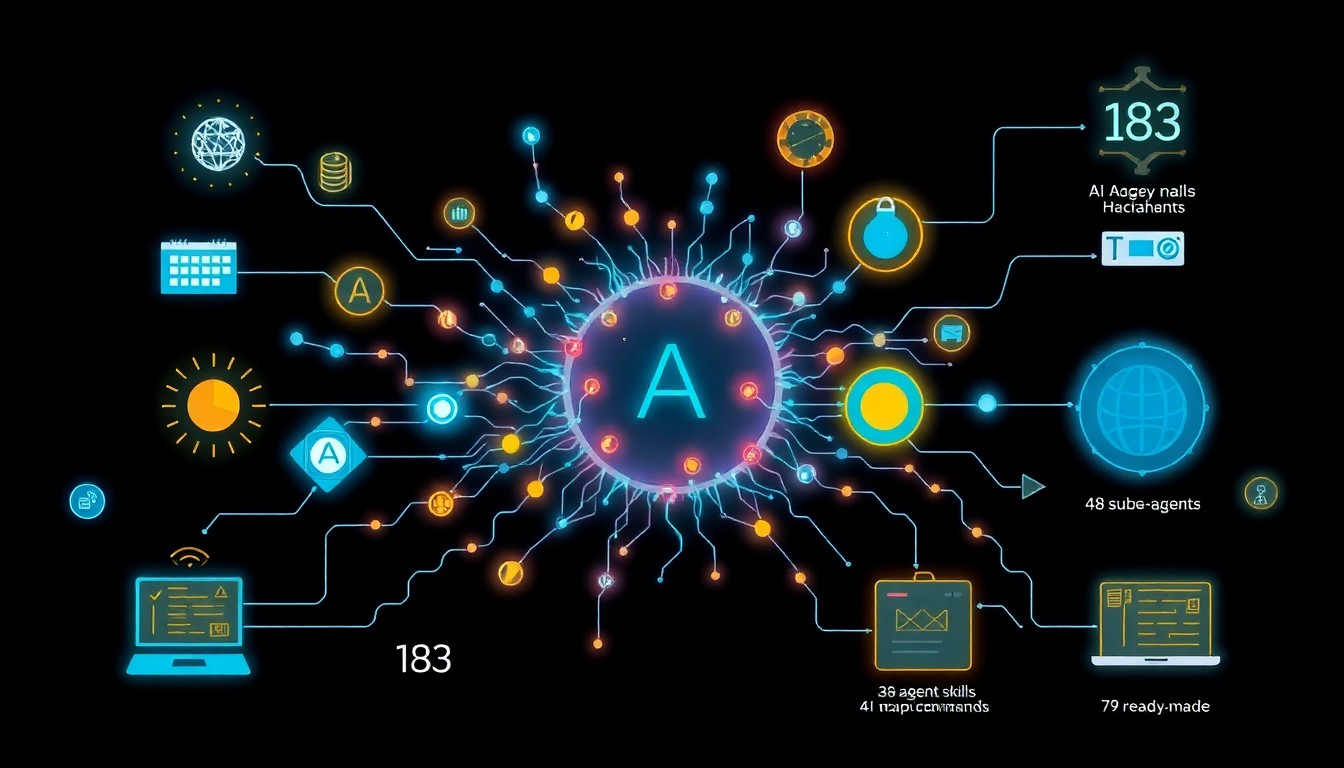
This course delves into the world of AI agents, focusing on the open-sourced AI coding setup by the winner of the Anthropic Hackathon. The hackathon winner spent 10 months developing a comprehensive AI system, which includes 183 agent skills, 48 sub-agents, and 79 ready-made commands. This course will explore the key concepts, step-by-step process, and real-world applications of AI agents, providing a thorough understanding of this complex topic.
Background & Context
The Anthropic Hackathon is a prestigious event that brings together talented developers and researchers to create innovative AI solutions. The hackathon winner's achievement is a testament to the potential of open-source collaboration and the power of AI in solving complex problems. The AI coding setup developed by the winner is a significant contribution to the field, as it provides a comprehensive framework for building AI agents. This course will explore the key concepts and techniques used in the AI coding setup, providing a deeper understanding of the field.
Core Concepts
AI Agents
AI agents are software programs that can perform tasks, make decisions, and interact with their environment. They are a fundamental component of artificial intelligence and are used in a wide range of applications, from chatbots and virtual assistants to self-driving cars and robots. In the context of the Anthropic Hackathon, AI agents refer to the 183 skills and 48 sub-agents developed by the winner.
Agent Skills
Agent skills are the specific abilities or capabilities that an AI agent possesses. In the case of the Anthropic Hackathon winner, the 183 agent skills include a wide range of tasks, such as language processing, image recognition, and decision-making. These skills are the building blocks of the AI agent and are used to perform specific tasks and make decisions.
Sub-Agents
Sub-agents are smaller AI agents that are used to perform specific tasks or functions within a larger AI system. In the case of the Anthropic Hackathon winner, the 48 sub-agents are used to perform tasks such as data processing, natural language processing, and machine learning.
Ready-Made Commands
Ready-made commands are pre-built commands that can be used to interact with the AI agent. In the case of the Anthropic Hackathon winner, the 79 ready-made commands provide a convenient way to interact with the AI agent and perform specific tasks.
How It Works / Step-by-Step
The AI coding setup developed by the Anthropic Hackathon winner is a complex system that involves several steps and components. Here is a step-by-step overview of how it works:
- Agent Development: The first step in developing the AI agent is to create the agent skills and sub-agents. This involves designing and implementing the specific abilities and capabilities that the AI agent will possess.
- Agent Training: Once the agent skills and sub-agents are developed, the next step is to train the AI agent using machine learning algorithms and data. This involves feeding the AI agent a large amount of data and allowing it to learn from the data.
- Agent Deployment: Once the AI agent is trained, it can be deployed in a specific environment or application. This involves integrating the AI agent with other systems and applications to perform specific tasks.
- Agent Maintenance: Finally, the AI agent requires maintenance and updates to ensure that it continues to perform optimally. This involves monitoring the AI agent's performance, updating its skills and sub-agents, and making adjustments as needed.
Real-World Examples & Use Cases
Here are a few real-world examples and use cases for AI agents:
- Chatbots: AI agents can be used to create chatbots that can interact with customers and provide support and assistance.
- Virtual Assistants: AI agents can be used to create virtual assistants that can perform tasks such as scheduling appointments, sending emails, and making phone calls.
- Self-Driving Cars: AI agents can be used to create self-driving cars that can navigate roads and make decisions in real-time.
- Robotics: AI agents can be used to create robots that can perform tasks such as assembly, inspection, and maintenance.
Key Insights & Takeaways
- AI agents are software programs that can perform tasks, make decisions, and interact with their environment.
- Agent skills are the specific abilities or capabilities that an AI agent possesses.
- Sub-agents are smaller AI agents that are used to perform specific tasks or functions within a larger AI system.
- Ready-made commands are pre-built commands that can be used to interact with the AI agent.
- AI agents require maintenance and updates to ensure that they continue to perform optimally.
Common Pitfalls / What to Watch Out For
- Overfitting: AI agents can suffer from overfitting, which occurs when the AI agent is too complex and is unable to generalize to new data.
- Underfitting: AI agents can also suffer from underfitting, which occurs when the AI agent is too simple and is unable to capture the underlying patterns in the data.
- Data Quality: AI agents require high-quality data to perform optimally. Poor data quality can lead to poor performance and inaccurate results.
Review Questions
- What are the key components of an AI agent, and how do they work together to perform tasks and make decisions?
- How do agent skills and sub-agents contribute to the overall performance of an AI agent?
- What are the benefits and drawbacks of using ready-made commands to interact with an AI agent?
Further Learning
- Machine Learning: To build on the knowledge gained in this course, it is recommended to learn more about machine learning and its applications in AI.
- Natural Language Processing: Natural language processing is a key component of AI agents, and learning more about this topic can help to deepen understanding of AI agents.
- Robotics: Robotics is another area where AI agents are being applied, and learning more about this topic can help to gain a deeper understanding of the field.